The Best Ho-Oh Cards to Invest In (2026): The 4x Neo Grail & the Tower Discount, in PSA 10
On this page
- 01The Ho-Oh framework
- 02The Ho-Oh card ladder
- 03Neo Revelation 1st Edition
- 04Neo Revelation (Unlimited)
- 05Unseen Forces Ho-Oh ex
- 06The ghost tier
- 07Neo Revelation #18
- 08The modern tier
- 09The twin, the pair & the premium
- 10How high can they go?
- 11Match cards to your risk
- 12How to buy safely
- 13Investing on Graded
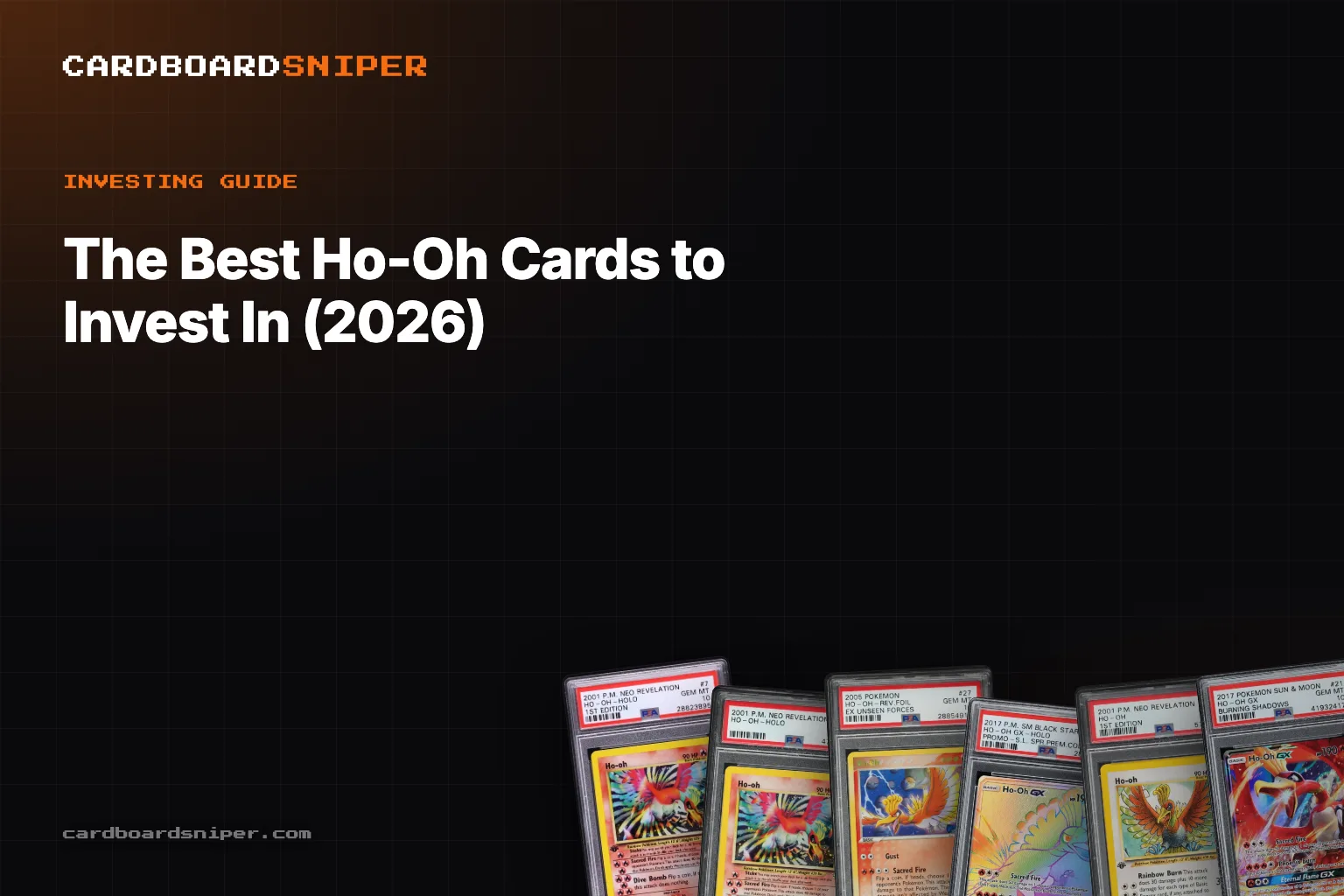
Ho-Oh is the legendary the hobby keeps underestimating. The rainbow phoenix fronts the second generation's mythology opposite Lugia, and in 2026 its grail finally traded like it: the 1st Edition Neo Revelation Ho-Oh ran from $3,899 to $14,400, a 4× repricing on the same wave that moved every Neo-era chase in this series. Beneath it sits a ladder of quiet sleepers, and above it a two-piece ghost that almost never trades.
This guide ranks the best Ho-Oh cards to invest in, built the same way as the rest of this series (the Pokémon pillar, Lugia, Mew): on real numbers. Every price below is a real PSA 10 sold comp from CardboardSniper's pricing engine (eBay and Fanatics), not an asking price. Ten cards, every era, $60 to $14,400, and how to buy each one safely.
Nothing here is financial advice. Cards are a real but volatile asset class, and you should never put in money you can't afford to lose. Here's what the data shows.
- The 1st Edition Neo Revelation Ho-Oh is the grail: real PSA 10 comps ran from a $3,899 median to $13,800 and $14,400 in mid-2026, a 4× repricing.
- Every card in this guide is quoted in PSA 10: the same 1st Edition holo is $1,439 in PSA 9 and $14,400 in PSA 10, a 10× premium.
- The Unlimited holo followed: $5,750 in March 2026, tracking the stamp at the Neo-standard 40% ratio.
- The Unseen Forces Ho-Oh ex is the ex-era sleeper: $2,000 on its latest print, from the same set as the $50,400 Lugia ex, a 25× gap between set-mates that shared a pull rate.
- The Ho-Oh LEGEND is a ghost: the two-piece HGSS masterpiece has no functioning complete-pair gem market, exactly like its Lugia twin.
- The modern tier is the cheapest in this series: four liquid GX/ex cards between $60 and $528, an on-ramp priced for accumulation.
The Framework: What Makes a Ho-Oh Card an Investment
Every card below passes the same five-part filter we use across this series. Ho-Oh's twist: it's the lagging half of a legendary pair. Lugia's ladder repriced first and hardest (a $78,000 Crystal, a $45,000 grail); Ho-Oh's equivalents trade at deep discounts to their twin with the same era scarcity underneath. Pair trades don't resolve overnight, but they resolve.
- Tower-duo demand renews: every Johto revival (and the 2025 Destined Rivals cycle proved the pattern) points new collectors at both towers, not one.
- The print run is the asset: the Neo Revelation stamp, the two-piece LEGEND distribution, the ex-era pull rates.
- The Lugia discount is the trade: grail versus grail, Ho-Oh trades at a third of its twin. The gap is demand-driven, and demand is the thing 2026 kept repricing.
- Gem scarcity is the moat: the rainbow holo shows every flaw; 10× gem premiums run through the vintage tier.
- Liquidity is modern and cheap: the GX tier trades daily under $600, unusual for a legendary of this stature.
The Ho-Oh Card Ladder
Ten cards (eight tradeable rungs plus the LEGEND ghost and a documented no-comp promo), on real PSA 10 sold comps:
Bars use a logarithmic scale so every rung is visible. Every value is a real 2025-2026 PSA 10 sold comp, not an asking price.
Read it as three tiers. The modern GX/ex quartet is the accumulation tier, all under $600. The Neo non-holo, the Unseen Forces ex, and the Unlimited holo hold the middle. And the 1st Edition grail tops the tradeable ladder, with the LEGEND ghost unpriced above it.
2001 Neo Revelation 1st Edition Ho-Oh: The Grail
The 1st Edition Ho-Oh #7is the phoenix's first English card, from the same set that birthed the Shining Gyarados. The engine has every PSA 10 sale:
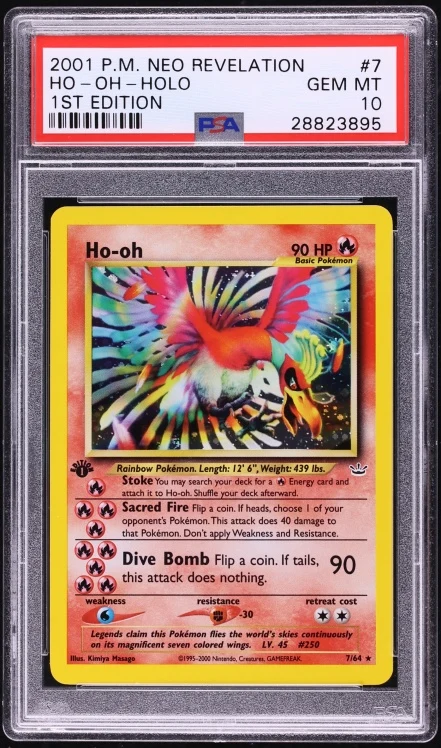
Real sold comps from CardboardSniper's pricing engine · 9 sales(eBay & Fanatics).
From a $3,899 longer-run median to $13,800 and $14,400 in May-June 2026: the Neo-era repricing arriving on schedule. Against its tower twin the discount is stark: the 1st Edition Lugiaholds $45,000 on comparable scarcity. The PSA 9 around $1,439 is the entry, and the 10× gem premium is the rainbow holo's condition tax at work.
2001 Neo Revelation Ho-Oh (Unlimited): The Second Press
Real PSA 10 sales:
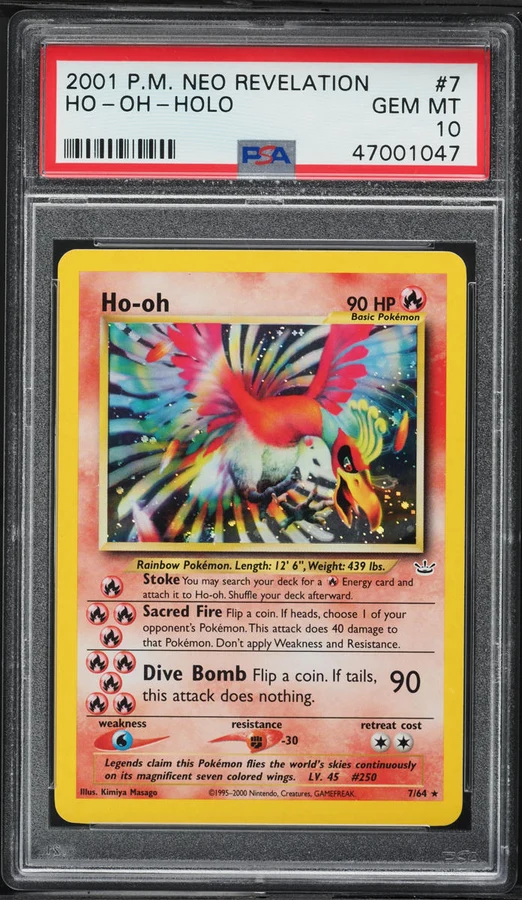
Real sold comps from CardboardSniper's pricing engine · 4 sales(eBay & Fanatics).
Around $5,750 on its March 2026 print, a 40% ratio to the stamp that sits right on the Neo-era trend line. Thin float, real demand, and the version most collectors can actually chase.
2005 EX Unseen Forces Ho-Oh ex: The 25× Gap
The Unseen Forces Ho-Oh ex #104 shares a set, a rarity slot, and a pull rate with the Lugia ex that printed $50,400. Real PSA 10 sales:
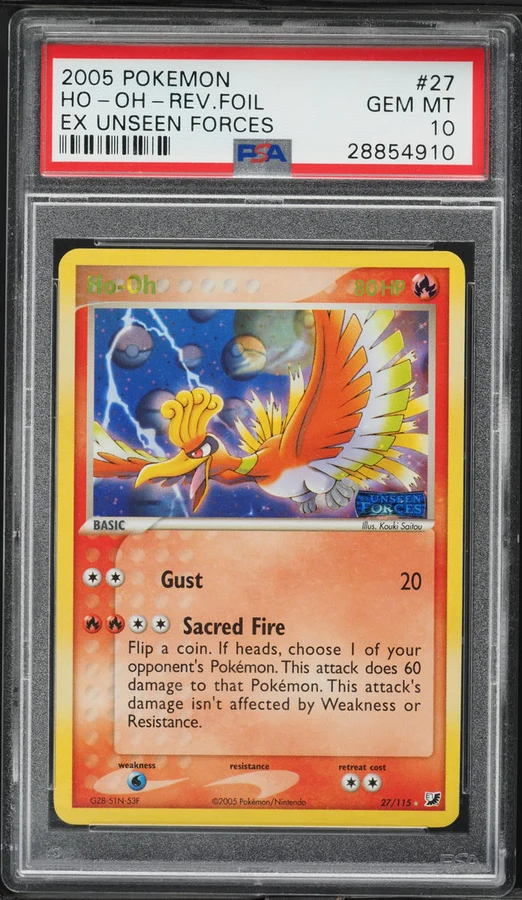
Real sold comps from CardboardSniper's pricing engine · 3 sales(eBay & Fanatics).
The Ho-Oh trades at $2,000: a 25× gap between set-mates with identical scarcity. Some of that is demand (Lugia outdraws everyone), but 25× is not a demand-shaped number when the ex-era class has repriced 5-10× everywhere else in this series. This is the ladder's clearest asymmetry, and the PSA 9 at $374 prices the thesis at pocket change.
The Ghost Tier: The Ho-Oh LEGEND and the Missing Shinies
- HGSS Ho-Oh LEGEND (two-piece). The art-deco masterpiece printed as top and bottom halves, twin to the Lugia LEGEND. Complete PSA 10 pairs essentially never trade; halves change hands in the hundreds. The forgotten-era HGSS repricing (the Mew Prime's $13,000, the Umbreon Prime's $4,560) is the reference for what a surfaced pair is worth.
- The 2011 Call of Legends shiny Ho-Oh (SL3) has no recent graded comps in our archive at all, a genuine rarity gap: the card exists, collectors want it, and its market is pure private negotiation. Documented here because no listing-scraper guide can even see it.
2001 Neo Revelation Ho-Oh #18: The Other Neo Ho-Oh
The same set carried a second, non-holo Ho-Oh, and its gem market is real. Real PSA 10 sales:
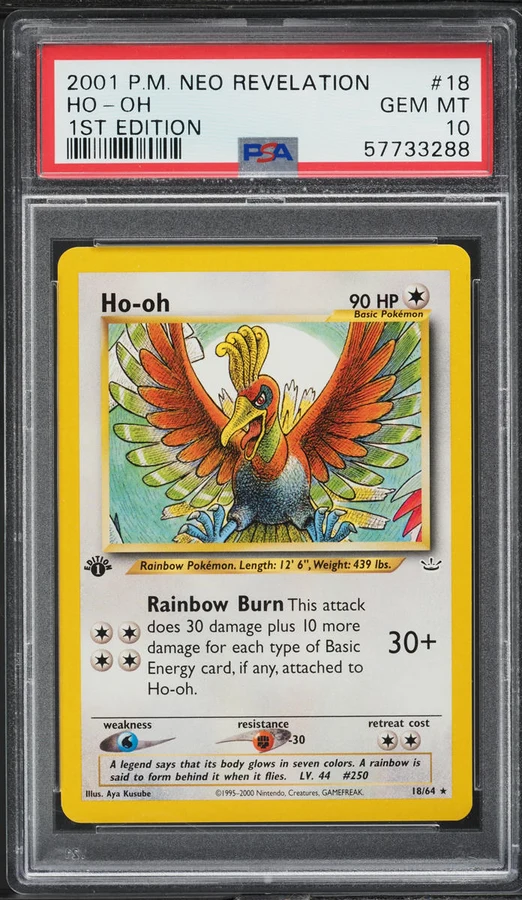
Real sold comps from CardboardSniper's pricing engine · 5 sales(eBay & Fanatics).
Non-holo rares from 2001 almost never got graded, so gems are scarcer than the card's reputation suggests. It's the budget claim on Neo Revelation scarcity, and the pattern (non-holo gems outperforming their reputation) has repeated across this series from the Jungle Snorlax #27 up.
The Modern Tier: Shining Legends, Burning Shadows, Hidden Fates, and Ethan's
Four cards form the accumulation tier. The Shining Legends Ho-Oh GX, mascot of its own set, leads at ~$528:
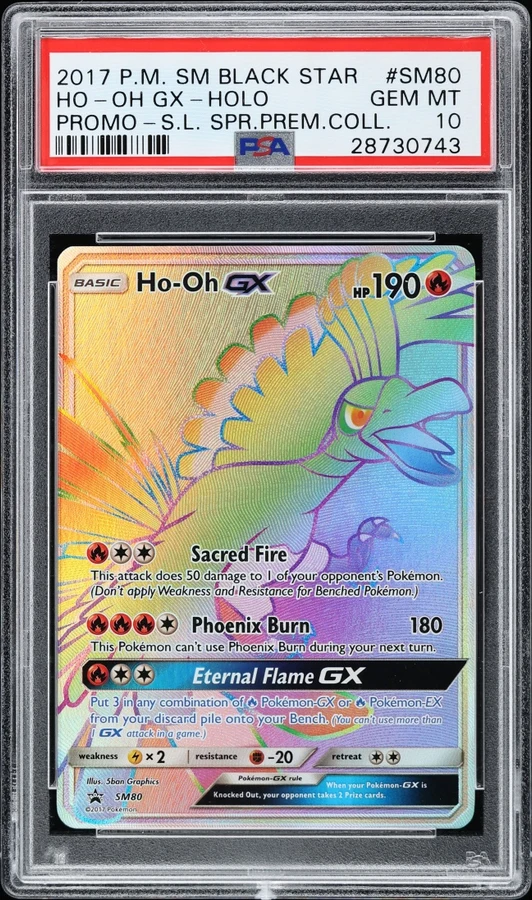
Real sold comps from CardboardSniper's pricing engine · 4 sales(eBay & Fanatics).
The Burning Shadows GX holds ~$180:
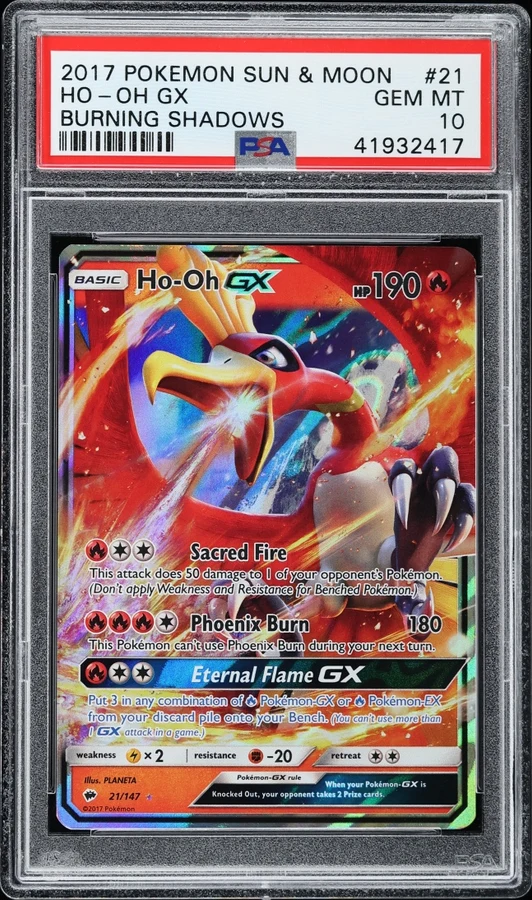
Real sold comps from CardboardSniper's pricing engine · 2 sales(eBay & Fanatics).
The Hidden Fates Ho-Oh GX #SV50 trades at ~$140 on 21 comps:
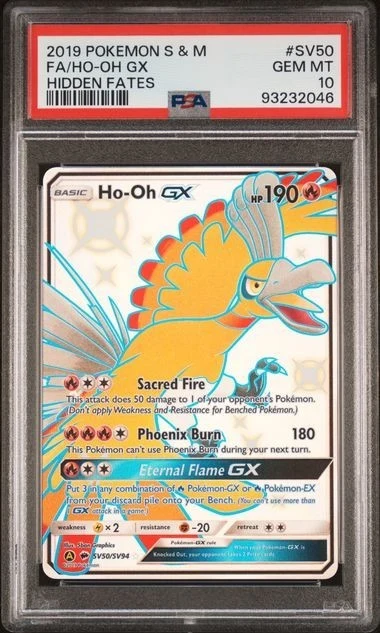
Real sold comps from CardboardSniper's pricing engine · 21 sales(eBay & Fanatics).
And Ethan's Ho-Oh exfrom 2025's Destined Rivals, the revival card that renewed the whole demand cycle, is the newest entry at ~$60 on 59 comps:
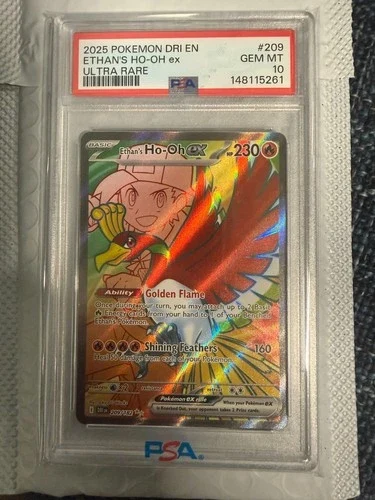
Real sold comps from CardboardSniper's pricing engine · 40 sales(eBay & Fanatics).
The Twin, the Pair, and the Ho-Oh Premium
- The tower discount is the thesis: grail vs grail at 3×, ex vs ex at 25×, LEGEND half vs LEGEND half at parity. The gaps are inconsistent, and inconsistent gaps are tradeable.
- The Neo repricing arrived: 4× on the grail, right on schedule with the rest of the Neo class this series has tracked.
- The ghost tier is pure optionality: a two-piece LEGEND pair or a Call of Legends shiny surfacing at auction would print its own market.
- The modern tier is an accumulation gift:nowhere else in this series does a top-tier legendary's modern chase trade under $600 across four liquid cards.
The playbook: anchor in the 1st Edition grail (or its $1,439 PSA 9), take the Unseen Forces ex as the asymmetric bet, accumulate the modern tier while it's priced like commons, and watch auctions for the ghosts.
How High Can Ho-Oh Cards Go?
The ceiling reference is one tower over: Lugia's equivalents trade at 3-25× Ho-Oh's across the ladder, on the same sets and the same scarcity. The asset class both live in is still tiny:
Total market value: collectibles as an asset class, next to gold, mega-cap tech, and crypto.
The right column is how many times bigger each one is than the entire collectibles market. Collectibles are already a real asset class, larger than a top-ten crypto like Dogecoin, yet still a fraction of a single mega-cap stock and barely a rounding error next to gold. That gap is the runway: as collectibles mature into a transparently priced, investable asset class, the best cards have room to re-rate that the giants no longer do.Figures approximate, 2026: gold = all above-ground gold; equities = market cap; crypto = network value; collectibles = estimated global market size. Bars use a log scale for visibility.
And the returns case is on the board:
Matching Ho-Oh Cards to Your Risk Tolerance
Anchor in the Neo pair, size the ex knowing the 25× gap can close slowly or not at all, and treat the ghost tier as lottery tickets with documented odds. The most common mistake is buying LEGEND halves at pair prices; a top half alone is half a card, whatever the listing says.
Why Every Card Here Is a PSA 10
The same 1st Edition Ho-Oh is $1,439 in PSA 9 and $14,400 in PSA 10. The rainbow holo is among the hobby's least forgiving surfaces, and grading turned that into fixed supply. Our Pokémon PSA 10 price guide covers the grade math in depth.
How to Buy Ho-Oh Cards Safely
- Price off sold comps, never listings, via CardboardSniper's value calculator.
- Read the number: holo #7 versus non-holo #18 on Neo Revelation, and complete LEGEND pairs versus single halves.
- Respect ghost markets: no comps means no price; bid like it.
- Assume fakes on the vintage tier. Cert-verified slabs are the floor.
- Get pinged when one lists below market. The CardboardSniper scanner watches eBay and Fanatics for this exact card and grade around the clock.
Investing in Ho-Oh Cards on Graded
Everything this guide measures, CardboardSniper does live: real fair-market values with the value calculator, and the live deal feed where below-market listings surface.
FAQs
What is the best Ho-Oh card to invest in?
The 1st Edition Neo Revelation Ho-Oh: real PSA 10 comps ran from a $3,899 median to $14,400 in June 2026, with the PSA 9 near $1,439 as the entry. The Unlimited holo (~$5,750), the Unseen Forces ex (~$2,000, a 25× discount to its Lugia set-mate), and the sub-$600 modern GX tier cover the rest of the ladder.
How much is a 1st Edition Ho-Oh worth?
In PSA 10, real 2026 sales printed $13,800 and $14,400, four times the card's longer-run median. The PSA 9 trades around $1,439. Its tower twin, the 1st Edition Lugia, holds $45,000 on comparable scarcity, which frames the standing discount.
How much is a Ho-Oh LEGEND worth?
Complete PSA 10 pairs essentially never trade, exactly like the Lugia LEGEND; single halves change hands in the hundreds. It's a ghost market: the HGSS-era repricings (Mew Prime to $13,000) are the reference for what a surfaced pair would command, but the next real sale sets the price.
Why is the Ho-Oh ex so much cheaper than the Lugia ex?
Same set (EX Unseen Forces), same rarity slot, same pull rate: Lugia's ex printed $50,400 while Ho-Oh's trades at $2,000. Character demand explains part of it, but a 25× gap between set-mates is the widest in this series, and the ex-era class repricing suggests it narrows. That asymmetry is the card's whole investment case.
Are Ho-Oh cards a good investment?
Ho-Oh is the lagging half of the hobby's premier legendary pair: its grail just repriced 4×, its ex-era sleeper carries the series' widest set-mate discount, and its modern tier is priced for accumulation. The bet is convergence toward Lugia's levels; the risk is that the demand gap is permanent. Buy scarce printings at proven grades and price off real comps.